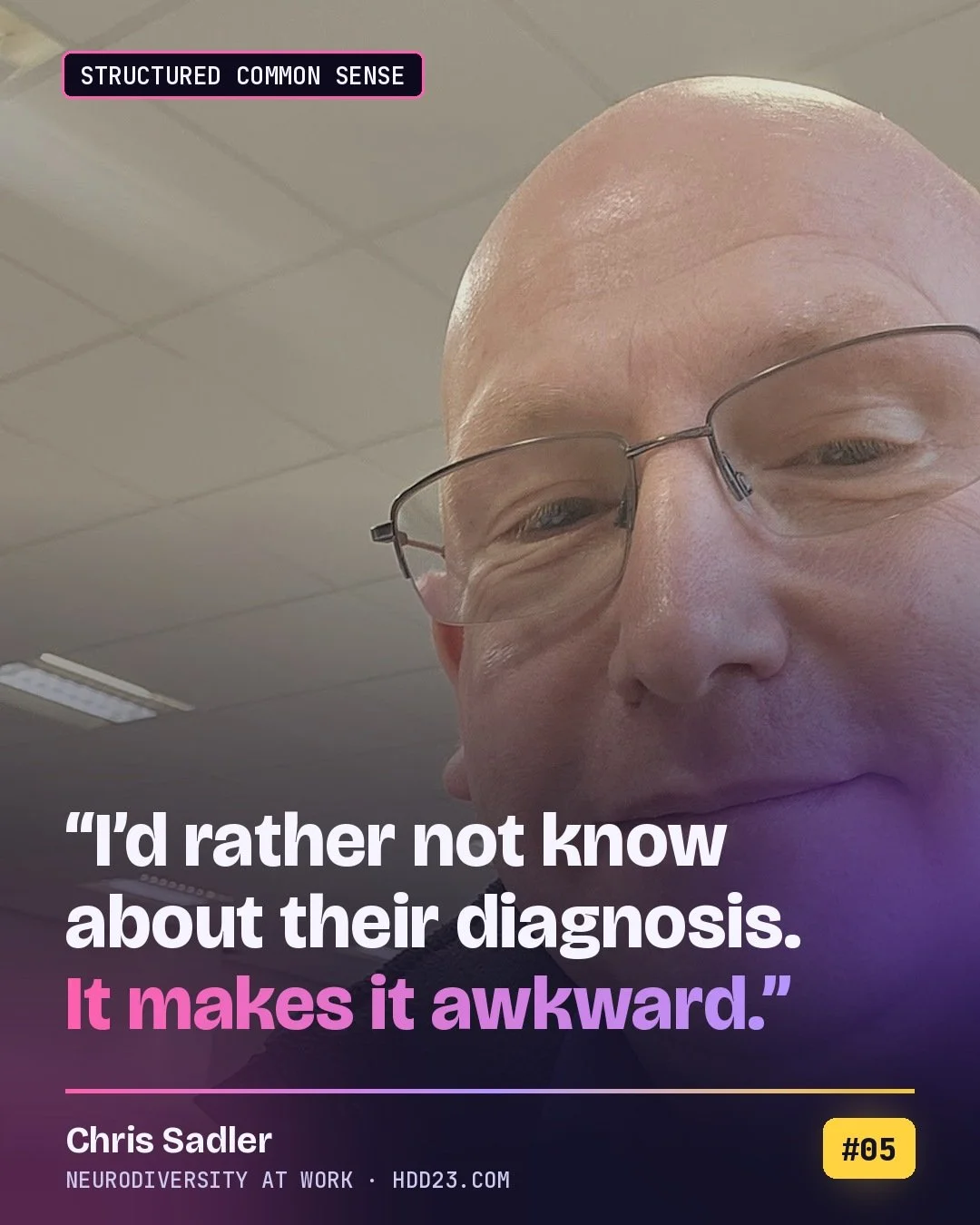
I'd rather not know about their diagnosis. It makes it awkward.
Nobody's ever said that to me in those words. But I've felt it.
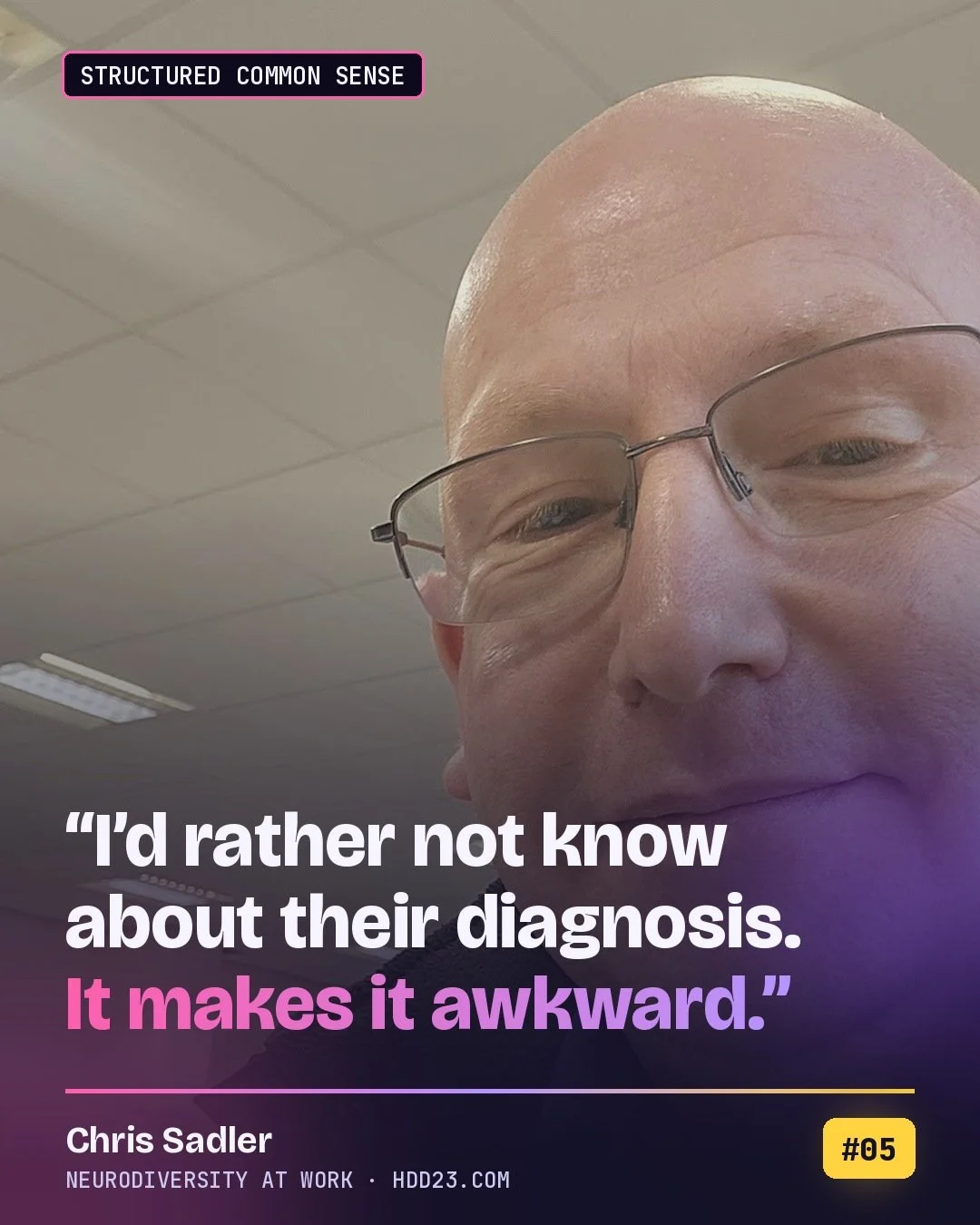
Nobody's ever said that to me in those words. But I've felt it.
I get where it comes from. If you don't know, you can't say the wrong thing. Not knowing feels safer for everyone.
Here's my side of it. We all want to belong somewhere: a football team, a computer game, a common cause. Since my autism and ADHD diagnosis, that's become MY club.
When I talk about it with people I've known for years, I see it in their eyes. A flicker of doubt, or a "where's this going?" It comes from a good place. They're worried about getting it wrong.
To be fair to them, the way they treat me hasn't changed one bit, and it doesn't need to.
I'm grateful for their warmth.
What's going on inside me in those moments is simple. I want to be understood. I want them to see what I see.
Here's the part nobody says.
Knowing doesn't make it awkward. Not knowing does.
Without the context, my over-explaining looks like waffle. Struggling with a last-minute change can look like being difficult. Once someone knows, it all makes sense, and there's usually a simple fix.
My workplace needs assessment in 2022 recommended that I tell colleagues about my challenges, if I was comfortable, and ask for their support.
It also gave me three questions for meetings: Does this need to be said? Does it need to be said right now? Does it need to be said right now, by me? (Still working on that one 😄)
None of that works if nobody's allowed to know.
So what do I wish people knew? I don't care if I'm wrong. I just wanna know how I can be right once more.
One thing to try: if someone shares a diagnosis with you, you don't need the perfect response. "Thanks for telling me. Is there anything that would help?" is plenty. Then carry on treating them exactly as before.
Have you ever shared something about yourself and watched the room go quiet?
Next Wednesday: "Why does a diagnosis matter? You're still the same person."
The small print: Yes, AI helped. Claude (and occasionally its LLM cousins) helps me turn my notes into structure and makes the image. The stories, the lived experience and the questionable jokes are all mine. Structure is my adjustment, and it turns out AI is rather good at it. More on that another week…
This first appeared on LinkedIn on 28 October 2026. Join the conversation there.
They're brilliant, so why can't they just cope with the meeting?
It's a fair question when you've seen someone hold a room. If they can do it once, surely they can do it every time?
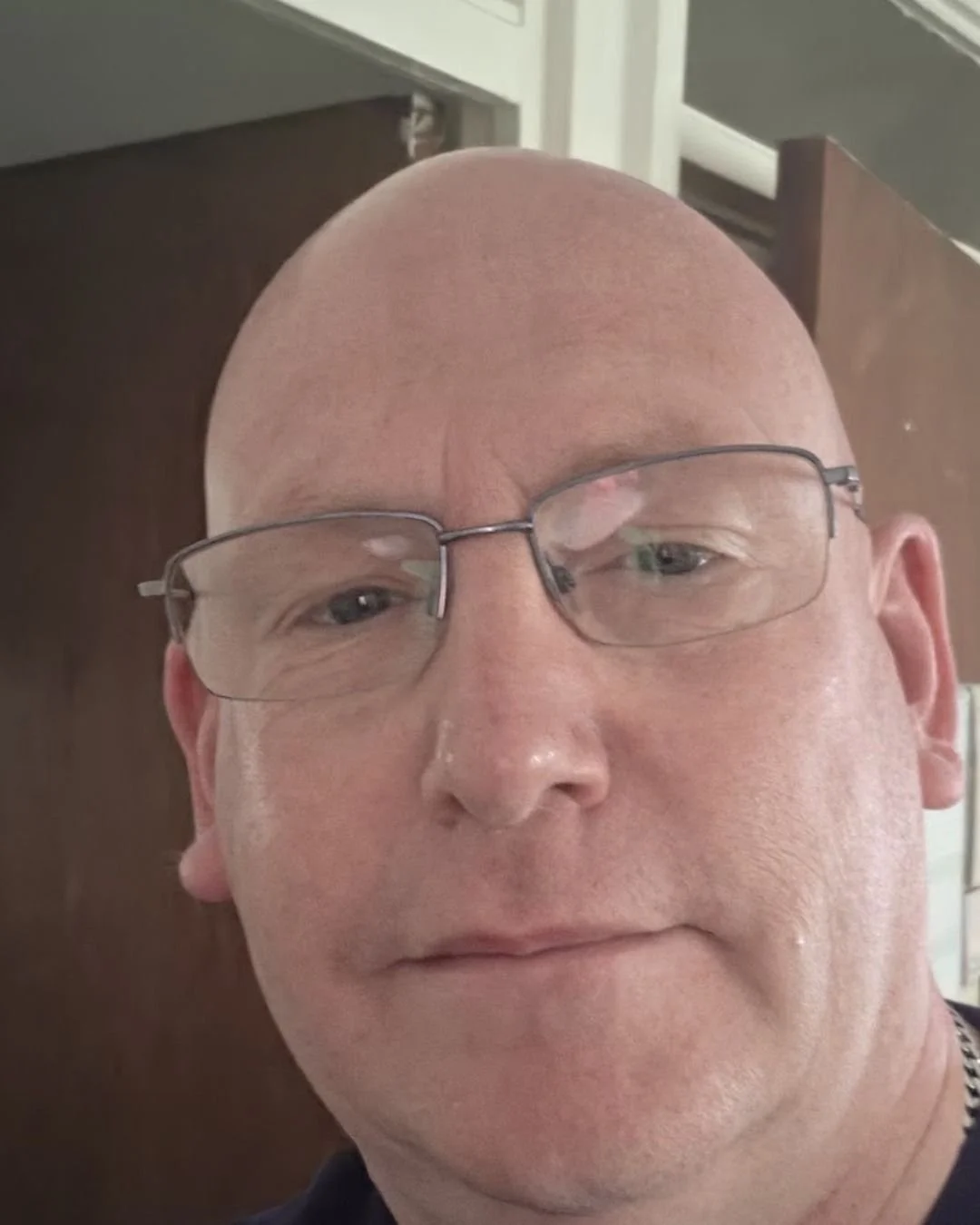
It's a fair question when you've seen someone hold a room. If they can do it once, surely they can do it every time?
Here's my confession.
I've presented to ExCo, the people who report directly to our CEO, with no dramas. Then, in November 2024, I was asked to speak for five minutes on a call with all the managers in my part of the business. I was terrified.
This was my home crowd. People who'd heard my unfiltered "water fountain and smoke shelter" views. People who'd watched me grow and develop.
One thing on my operating manual's "no patience" list: "Being treated as I was when they first met me and not noticing my growth." I was battling both the perception and the reality of not getting a second chance to make a second impression.
I booked a meeting room for 45 minutes beforehand, not to prepare but to stop myself over-preparing. Then I delivered five minutes on my vision for inclusion for disabled colleagues.
I've watched the recording back. I look calm. I even cracked a joke about inclusion making business sense to evil supervillains.
Afterwards, I was emotional.
It was the first chance I'd had to share that vision with so many people at once, and to put my name to it publicly.
What's really going on?
Elsewhere in that manual, one question asked what my team probably didn't know about my inner workings.
My answer: "How hard I try."
Coping isn't the same as costing nothing. What you see in the meeting is the finished product, not the effort behind it.
One thing to try: before a big meeting, tell people what you want, what good looks like and when you need it by.
Clarity up front means less energy spent guessing and more on the thing you actually asked for.
Have you ever found the home crowd harder than the big stage? I'd love to hear why.
Next Wednesday: "I'd rather not know about their diagnosis, it makes it awkward."
The small print: AI helped with the structure. The stories and the bad jokes are all mine. 😜
This first appeared on LinkedIn on 21 October 2026. Join the conversation there.
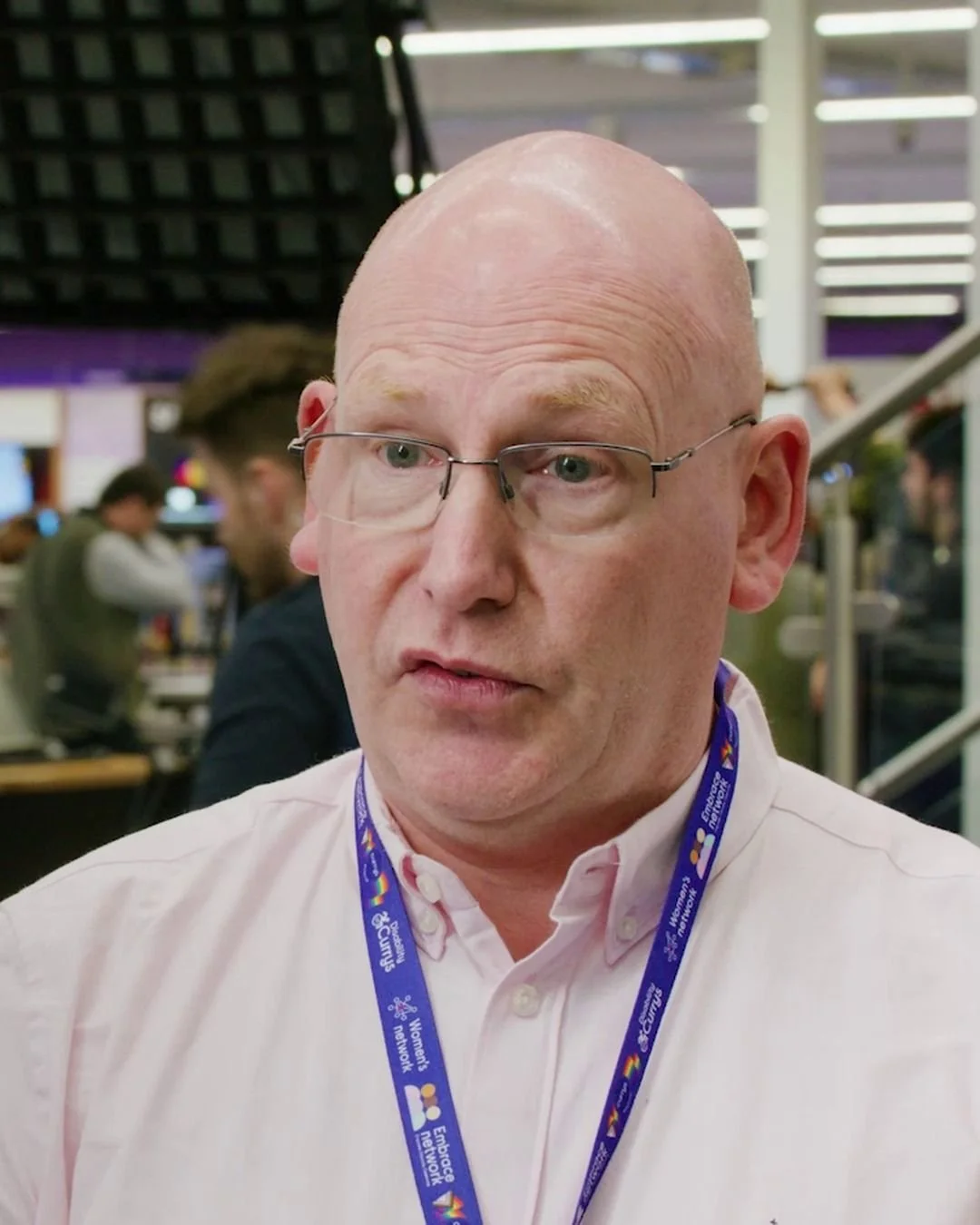
They managed before, so why do they need an adjustment now?
It's a fair question. From the outside, it can look like nothing has changed. Here's what it looks like from the inside.
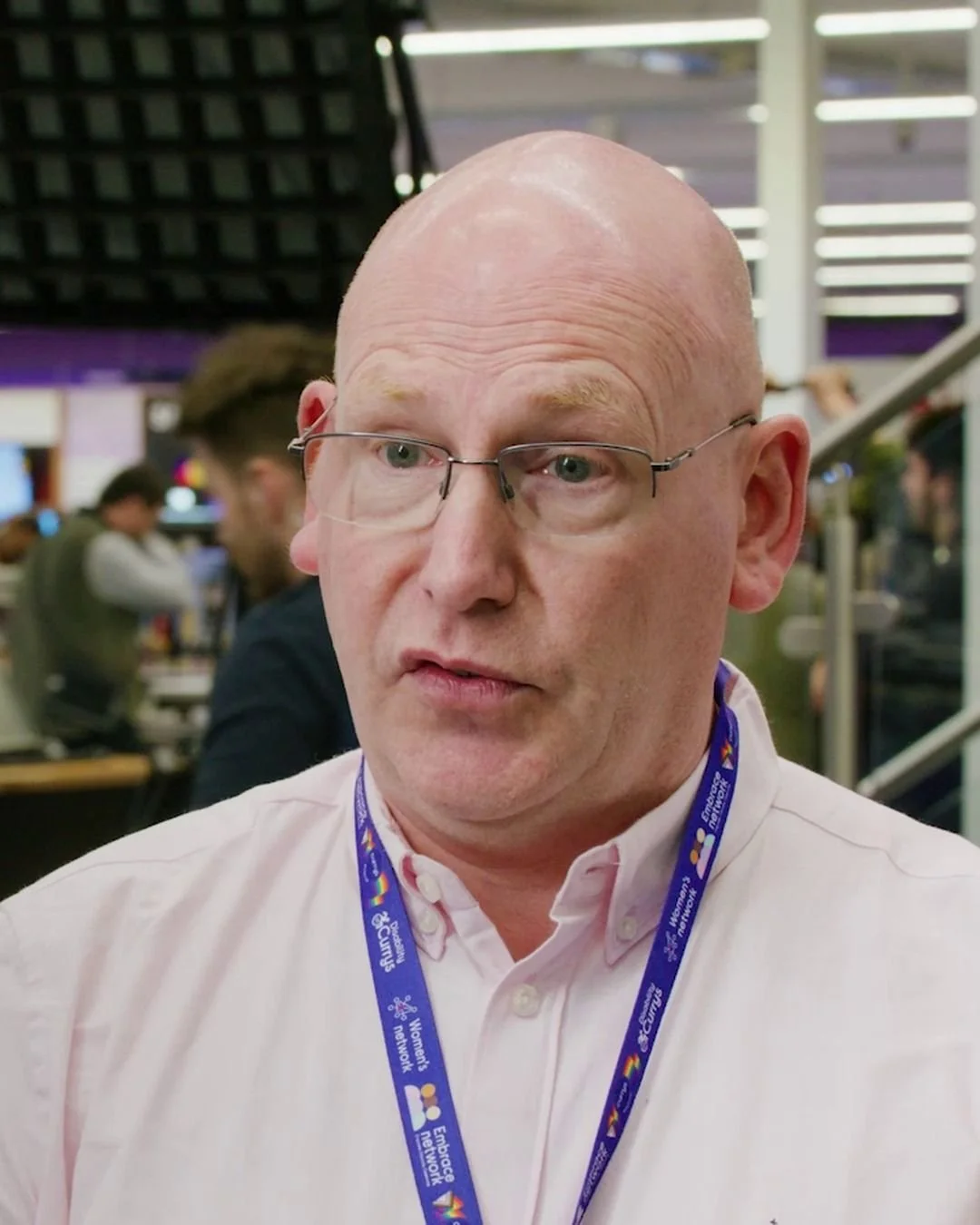
It's a fair question.
From the outside, it can look like nothing has changed. Here's what it looks like from the inside.
One of my strongest traits is dogged persistence. I'm known for pushing on against impossible odds, often seeing what needs to be done before anyone else does.
That takes its toll.
Too often, it's only when I hit what I now know to be autistic burnout that I finally ask for help. Masking makes it worse. It stretches out every process, including the time it takes to realise there's nothing left in my toolbox.
Giving up isn't in my DNA. So by the time I ask, I've usually been "managing" for a very long time.
I seem intelligent, articulate, confident and socially at ease. I can see why needing an adjustment might look almost nonsensical.
For years I didn't blame anyone else for that. I blamed myself. "You're overthinking it, Chris" is something I hear a lot.
It's said with care, not malice.
But here's what seems #Obvs to me: if I could make that email shorter, or that explanation more succinct, I flippin' well would!
An Occupational Health practitioner once asked me: "Can you succinctly summarise your challenges?" "Yes," I said. "Being succinct and summarising!" 😜
If I knew the answer for every situation, I'd have fixed it already.
So what did "managing" actually cost?
Honestly, a lot.
It's like driving a Ferrari in first gear. Coping, when excelling feels just out of reach, is heartbreaking. It hurts to admit I can't always succeed unassisted.
Something has changed for me. Through a mix of fluke and design, I'm now in positions where I'm listened to.
The irony? What I'm saying hasn't changed at all. It can't be right that you have to reach a position of influence to be seen, heard, valued and understood.
Coping is not the same as being okay.
Asking for help takes courage, usually after a long time of quietly running on empty.
One thing to try: when someone who's "always managed" asks for an adjustment, don't ask why now. Ask how long they've been carrying it. Then meet them with compassion, humility and an open mind. When we do, magic happens.
I've had many advocates over the years. I'm only still fighting because of them. Now I get to do the same for others.
What will you do today to advocate for someone whose truth is being drowned out by "business as usual"?
Next Wednesday: "They're brilliant, so why can't they just cope with the meeting?"
The small print: AI helped with the structure. The stories and the bad jokes are all mine. 😜
This first appeared on LinkedIn on 14 October 2026. Join the conversation there.
If I give them that, everyone will want it.
It's rarely said to your face, but it sits behind a lot of "no"s. I get it. Managers have a whole team to think about, and nobody wants to open the floodgates.
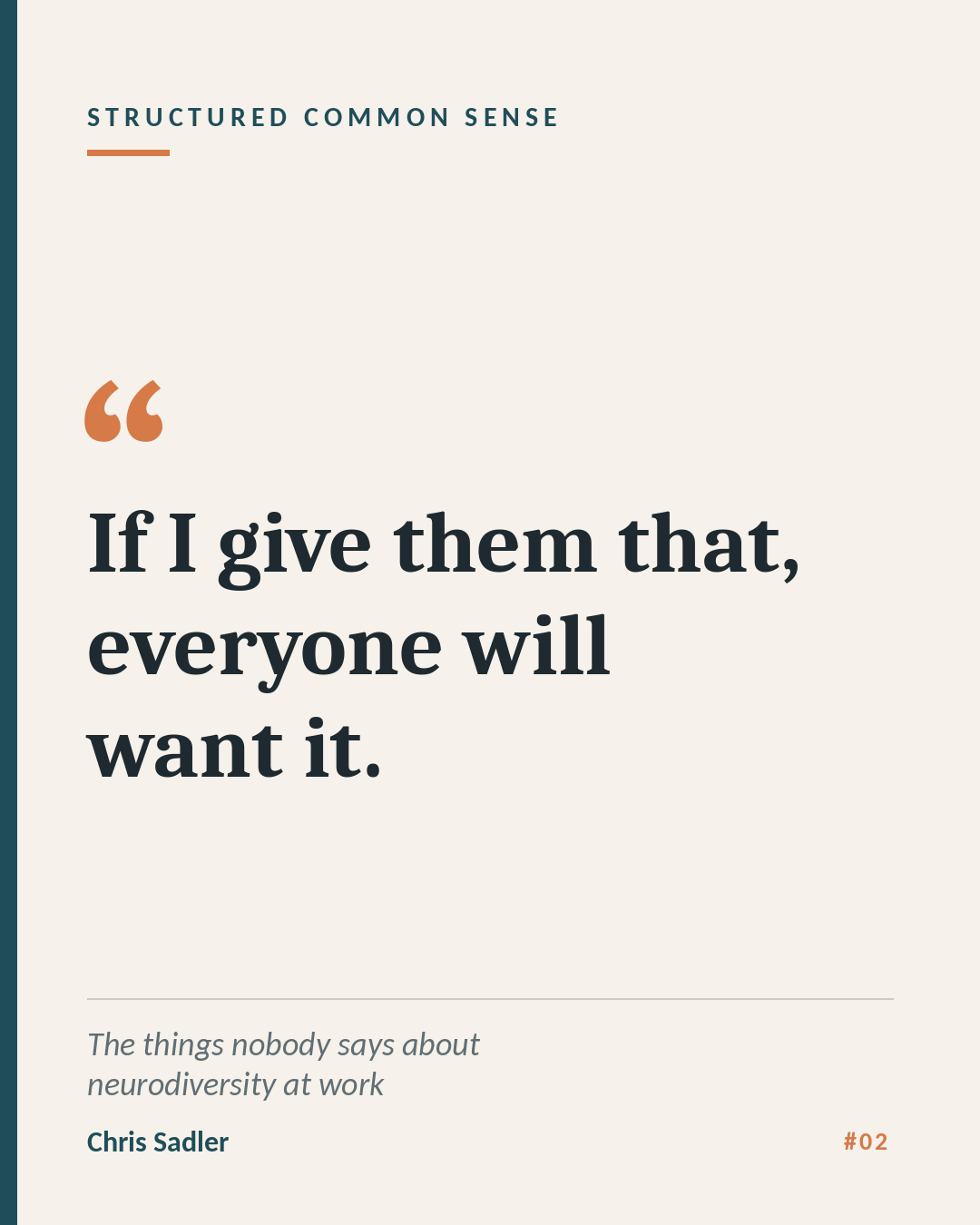
It's rarely said to your face, but it sits behind a lot of "no"s.
I get it. Managers have a whole team to think about, and nobody wants to open the floodgates.
Over the years I've seen it come up again and again.
Someone asks to wear headphones so they can concentrate.
A parent asks to keep their phone nearby, in case their neurodivergent child needs them.
Another parent is asked to say in advance when they'll need time off. As if meltdowns came with a calendar invite.
I'll be honest about where I sit in this. I've been one of the lucky ones. I've been given a lot of flexibility, and it's made all the difference.
But that's exactly what bothered me. Too often, whether you got an adjustment seemed to depend on who you knew, how senior you were or how loudly you asked.
I don't think that comes from malice. It comes from assumption.
Here's the part nobody says. In my experience, the floodgates rarely open. Most people don't want the headphones. The ones who ask aren't after a perk. They're asking for recognition that they are struggling with a noisy and distracting environment, perhaps disproportionately to those around them. The people who push hardest, meanwhile, tend to get what they want anyway.
So a blanket "no" doesn't stop everyone wanting it. It mostly stops the quiet, conscientious people: the ones who asked nicely, took "no" for an answer and carried on struggling.
One thing to try: next time you think "everyone will want it", ask two questions. What would it really cost if they did? What is it costing this person if I say no? Sometimes there's a genuine reason, like safety, and that's fair. But "everyone will want it" isn't a reason on its own.
What's an adjustment you've seen that ended up helping everyone?
Next Wednesday: "They managed before, so why do they need an adjustment now?"
The small print: Yes, AI helped. Claude (and occasionally its LLM cousins) helps me turn my notes into structure and makes the image. The stories, the lived experience and the questionable jokes are all mine. Structure is my adjustment, and it turns out AI is rather good at it. More on that another week…
This first appeared on LinkedIn on 7 October 2026. Join the conversation there.
Is this an adjustment, or am I being played?
Nobody says it out loud, but I'd bet most managers have thought it at least once. Here's what might surprise you: I've thought it too. About myself.
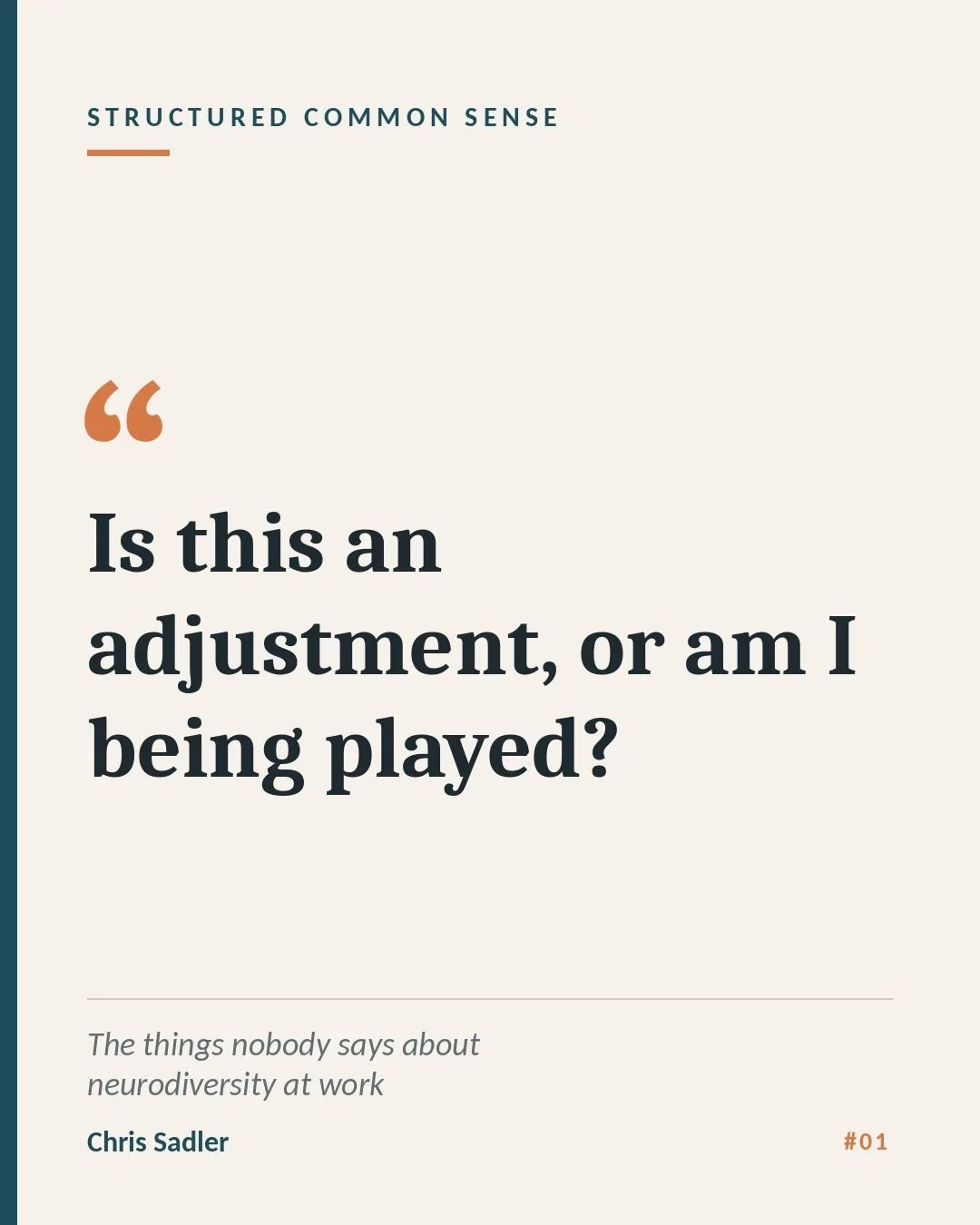
Nobody says it out loud, but I'd bet most managers have thought it at least once.
It's a fair question. It usually comes from wanting to be fair to everyone.
Here's what might surprise you: I've thought it too. About myself.
The first adjustment I asked for was simple: written instructions in a "what, by when" format, with regular check-ins to make sure the new approach was working.
While I waited for the answer, the voice in my head wasn't worried about a "no". It was saying:
"You're getting something extra. That's an unfair advantage."
"They'll think you're overthinking it."
The one that stung most: "They'll stop coming to you." Even if I was the best person for the job, it would be easier to ask someone who didn't need things written down.
Then, when I made a mistake (as we all do), it felt like the new method got the blame, not the simple fact that I'm human.
So here's what I've learned. An adjustment isn't a head start. It puts you on the same starting line everyone else is already standing on. The person asking for it is usually far more worried about fairness than you are.
One thing to try: next time someone with an adjustment gets something wrong, ask yourself, "Would I blame the method if anyone else had made this mistake?" Then keep going to them first.
Have you ever asked for something at work and worried how it looked?
Next Wednesday: "If I give them that, everyone will want it."
The small print: Yes, AI helped. Claude (and occasionally its LLM cousins) helps me turn my notes into structure and makes the image. The stories, the lived experience and the questionable jokes are all mine. Structure is my adjustment, and it turns out AI is rather good at it. More on that another week…
This first appeared on LinkedIn on 30 September 2026. Join the conversation there.
Structured Common Sense: the things nobody says about neurodiversity at work
Every Wednesday, I'll take one thought people have about neurodivergent colleagues but rarely say out loud, and answer it honestly from my side of the desk.
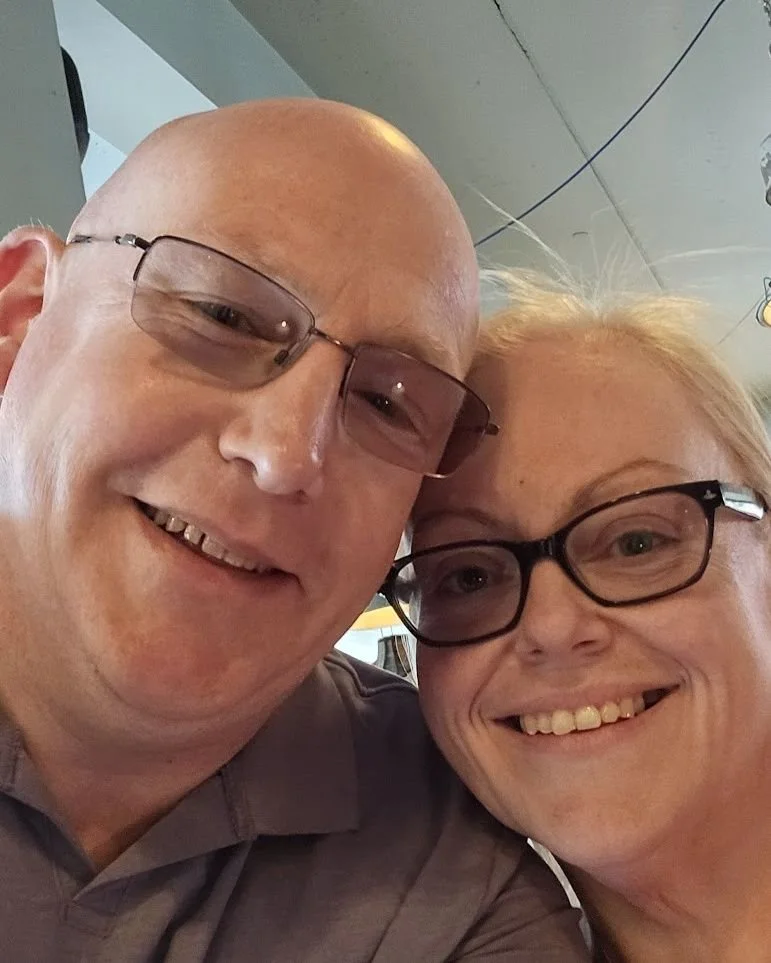
I did something totally bonkers a few years ago.
I listened to my amazing wife, Maria Sadler
She gently whispered to me that I had "a lot of traits of someone on the autistic spectrum."
Intrigued, I began to research my favourite subject (me!) and a momentous journey began, which brings me neatly to where I find myself this evening.
After getting my diagnosis, such was the power of that self-realisation that I made a conscious effort to give the people around me the same chance to know that they mattered. That they were "enough".
So I'm starting something new:
Structured Common Sense: the things nobody says about neurodiversity at work
Every Wednesday, I'll take one thought people have about neurodivergent colleagues but rarely say out loud, and answer it honestly from my side of the desk.
Common sense isn't all that common: what's obvious to one brain often isn't to another.
First up, this Wednesday: "Is this an adjustment, or am I being played?"
Whatever your views on neurodiversity, I hope you'll be curious enough to walk the path with me towards a more inclusive workplace.
So, what's the thought you've heard, or had yourself, but never said out loud? Send it to me here. It might just become a future post.
This first appeared on LinkedIn on 26 September 2026. Join the conversation there.