Nobody's ever said that to me in those words. But I've felt it.
I get where it comes from. If you don't know, you can't say the wrong thing. Not knowing feels safer for everyone.
Here's my side of it. We all want to belong somewhere: a football team, a computer game, a common cause. Since my autism and ADHD diagnosis, that's become MY club.
When I talk about it with people I've known for years, I see it in their eyes. A flicker of doubt, or a "where's this going?" It comes from a good place. They're worried about getting it wrong.
To be fair to them, the way they treat me hasn't changed one bit, and it doesn't need to.
I'm grateful for their warmth.
What's going on inside me in those moments is simple. I want to be understood. I want them to see what I see.
Here's the part nobody says.
Knowing doesn't make it awkward. Not knowing does.
Without the context, my over-explaining looks like waffle. Struggling with a last-minute change can look like being difficult. Once someone knows, it all makes sense, and there's usually a simple fix.
My workplace needs assessment in 2022 recommended that I tell colleagues about my challenges, if I was comfortable, and ask for their support.
It also gave me three questions for meetings: Does this need to be said? Does it need to be said right now? Does it need to be said right now, by me? (Still working on that one 😄)
None of that works if nobody's allowed to know.
So what do I wish people knew? I don't care if I'm wrong. I just wanna know how I can be right once more.
One thing to try: if someone shares a diagnosis with you, you don't need the perfect response. "Thanks for telling me. Is there anything that would help?" is plenty. Then carry on treating them exactly as before.
Have you ever shared something about yourself and watched the room go quiet?
Next Wednesday: "Why does a diagnosis matter? You're still the same person."
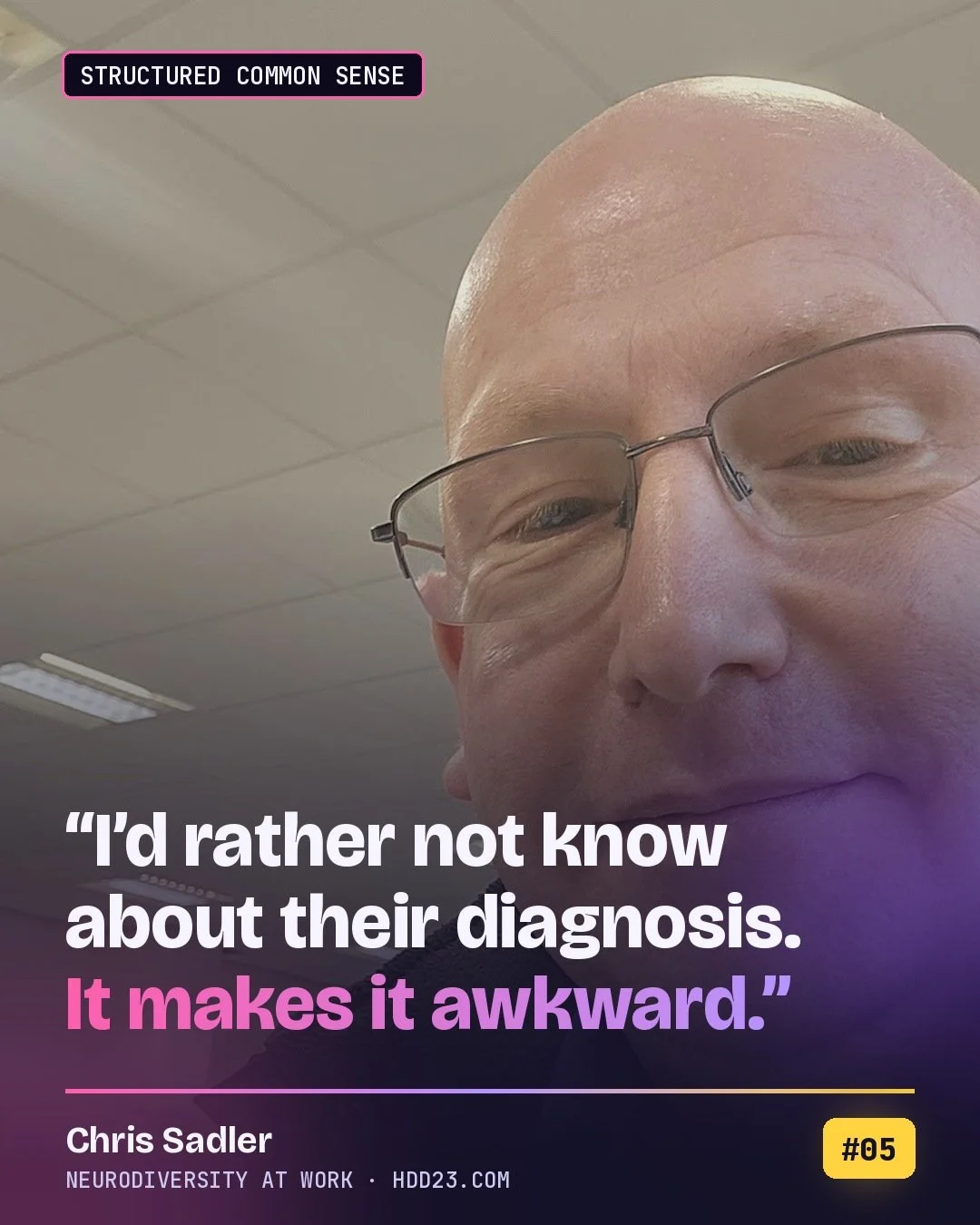
The small print: Yes, AI helped. Claude (and occasionally its LLM cousins) helps me turn my notes into structure and makes the image. The stories, the lived experience and the questionable jokes are all mine. Structure is my adjustment, and it turns out AI is rather good at it. More on that another week…
This first appeared on LinkedIn on 28 October 2026. Join the conversation there.