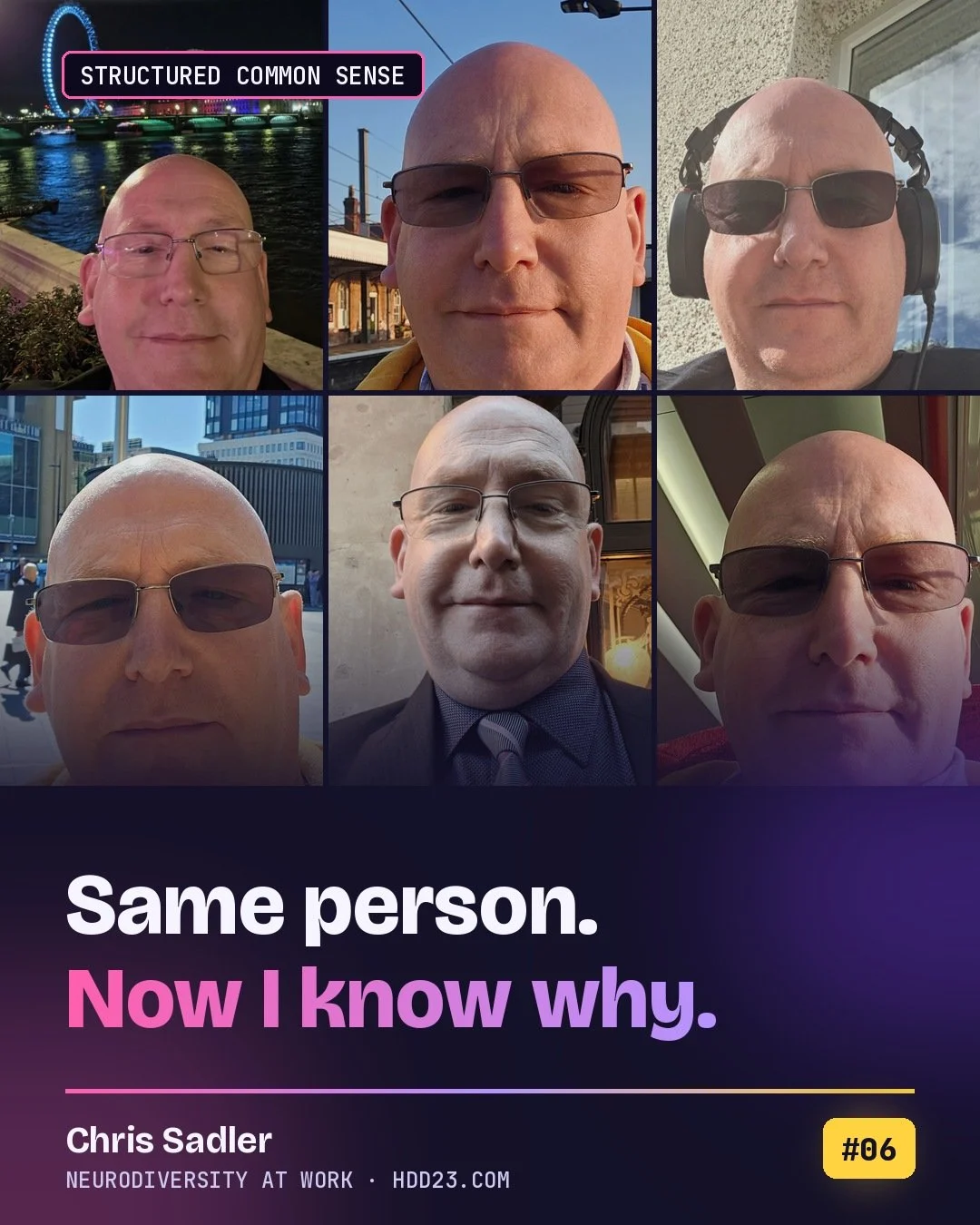
I hear this a lot. It's usually meant kindly. People don't want me put in a box, or to "define myself by a label".
They're not wrong. When Currys asked me to film a short video about my autism diagnosis, I said: "I will still be autistic on Monday morning."
I also talk to plenty of people who are working out their own neurodivergence and don't see the point of a formal diagnosis. I respect that. Perhaps a diagnosis isn't for everyone?
So for me, diagnosis is a bit of a paradox. It changed nothing yet changed everything.
Think of a scratchcard sitting on the kitchen table. Whether it's a winner was decided long before you picked it up.
Scratching it off doesn't change the card. It only changes what you know.
That's what my diagnosis did. I didn't become someone new. I finally understood that I'm wired differently, and that I genuinely don't see the world the way most people do.
It was strangely reassuring. If your car starts rattling, it could be the pistons about to explode out of the engine block, or a rogue ball bearing in the ashtray. Either way, I'd rather know which. 😄
Here's the part nobody says. "You're still the same person" is true. Knowing why you've always felt different, though, is often what finally lets you stop fighting it.
It's also about belonging, which matters to all of us. Last week I said my diagnosis had become MY club.
One thing to try: next time someone tells you about a diagnosis, swap "You're still the same person" for "What's changed for you since you found out?" It's just as kind, and it lets them tell you what it means.
Have you had a diagnosis, or decided you didn't need one? What changed for you?
Next Wednesday: "The allies you didn't know you had."
The small print: Yes, AI helped. Claude (and occasionally its LLM cousins) helps me turn my notes into structure. The stories, the lived experience and the questionable jokes are all mine. Structure is my adjustment, and it turns out AI is rather good at it. More on that another week…
This first appeared on LinkedIn on 4 November 2026. Join the conversation there.