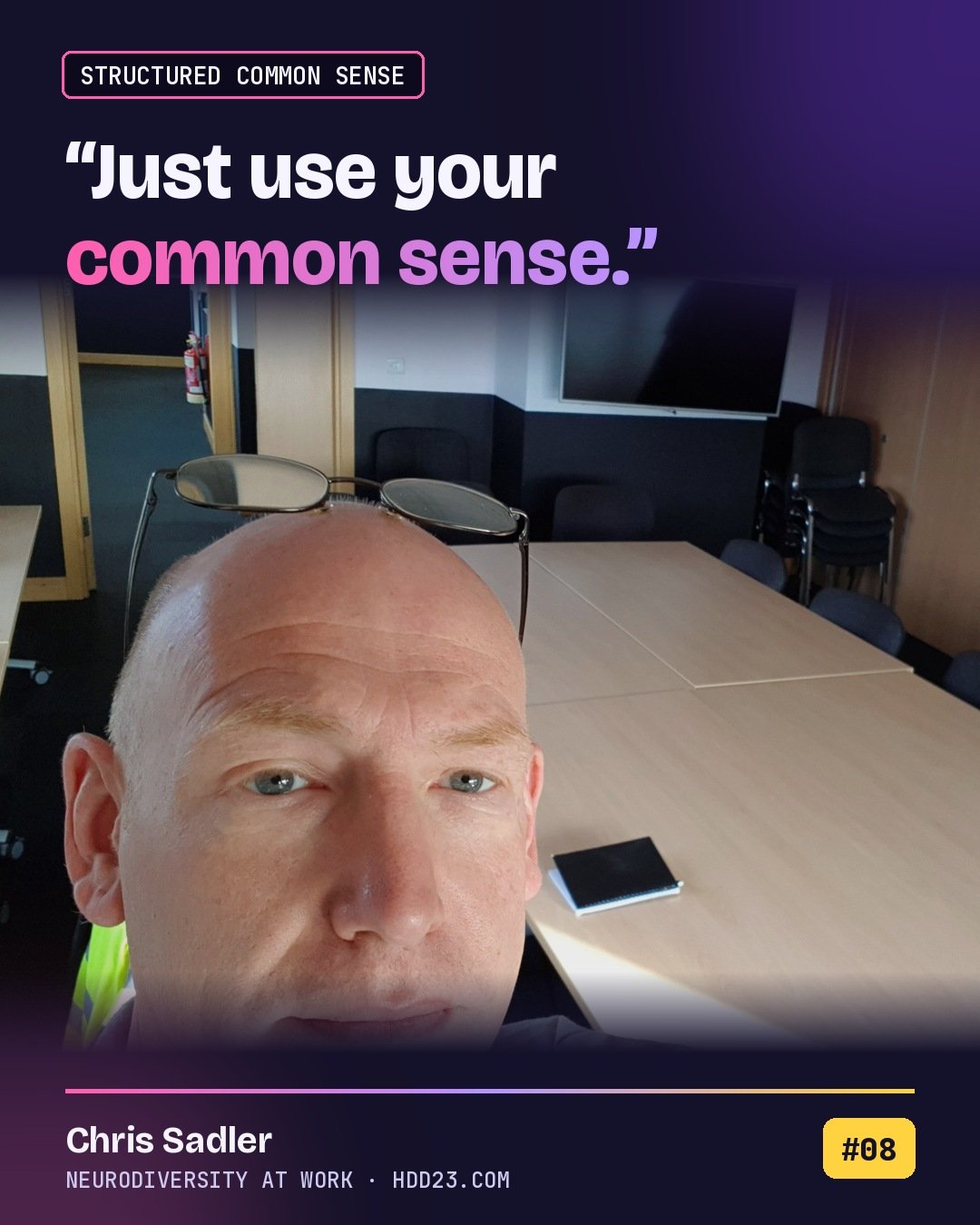
It's usually meant as trust. Nobody wants to micromanage, and spelling everything out can feel patronising.
A few years ago, my manager gave me a big piece of work with a site I was supporting:
"Just engage the team with our plan and get them to complete the waystages. You have the RACI. Crack on, Chris."
So I cracked on. To me, "engage" meant really engage. I spent hours with the teams, finding out where they saw value, and a disproportionate amount of time trying to get them to buy into the philosophy and see what I saw.
They told me they were on board. I took them at their word.
They weren't. They'd been nodding along, and the waystages hadn't moved. I found out at the same time as my manager, who was (understandably) not impressed. I got a proper kick up the backside.
The site came round eventually, but too late for me to deliver what had been asked.
Here's the part nobody says. Common sense isn't all that common. It's really a set of shared assumptions, and mine are wired differently. My manager's common sense said "chase the waystages". Mine said "win hearts and minds first". Both made perfect sense. Only one was what they actually wanted.
Add in that I take people at their word, and "Yes, we're on board" was all the evidence I needed.
My workplace needs assessments later recommended explicit instructions, measurable objectives and written summaries.
None of that is special treatment. It's just common sense, written down.
One thing to try: swap "Crack on" for three quick answers:
✅ What does done look like?
📅 By when?
🚩 What should I flag early if it's going wrong?
It takes two minutes, and it helps everyone, not just your neurodivergent colleagues.
What's the vaguest instruction you've ever been given?
Next Wednesday: "Why would anyone need an instruction manual for a person?"
The small print: Yes, AI helped. Claude (and occasionally its LLM cousins) helps me turn my notes into structure. The stories, the lived experience and the questionable jokes are all mine. Structure is my adjustment, and it turns out AI is rather good at it. More on that another week…
This first appeared on LinkedIn on 18 November 2026. Join the conversation there.