

A Blog for all things Geeky

The Riemann Hypothesis in simple terms
However, if you want to get an understanding of the rudiments of the Riemann Hypothesis, here is one of the simplest explanations I have come across. Hopefully, between his explanation and mine - you might find yourself a little further down the path of understanding.
"The laws of nature are but the mathematical thoughts of God."
Euclid circa 330 - 260 B.C. (According to Stanley Gudder (1976))
To my mind, mathematics is a Universal Truth. Whilst 1 golf ball has an obvious purpose here on earth; i.e. to be hit with a golf club; on the planet zog it may well be a snack to a rubber eating alien. However. Its property of "1" ness, i.e. there is but one of x - transcends time and space.
One has to surmise, therefore, that the laws of mathematics which give rise to such Truths, are also universal.
As I said previously, there is no pattern immediately visible in the primes. Like many others, however, my very soul screams "THERE MUST BE!".
One man who has brought humankind to the brink of understanding the behaviour and thus the sequence of the primes is Bernard Riemann
http://en.wikipedia.org/wiki/Bernhard_Riemann
Sadly, he died at the age of 39. He was a chaotic worker, often scribbling down what would later prove to be crucial mathematical proofs on the same page. His rooms were a total mess and so, when he died, to further compound the sadness of his friends and colleagues, his over-zealous housekeeper burnt many of his papers before being stopped by his family!
IMHO, the most important thing he left the world of mathematics was a teaser. He discovered the Riemann Zeta Function, written thus:-
\[\zeta (s) = \mathop \sum \limits_{n = 1}^\infty \frac{1}{{{n^s}}}.\]
Now I do not pretend for even a second that I understand the equation above fully. To give you an idea of the "size of the cow", take a look at this article and you will see the beauty and complexity of the Riemann Zeta Function.
http://mathworld.wolfram.com/RiemannZetaFunction.html
However, if you want to get an understanding of the rudiments of the Riemann Hypothesis, here is one of the simplest explanations I have come across. Hopefully, between his explanation and mine - you might find yourself a little further down the path of understanding.
YouTube Numberphile Video of Professor Edward Vladimirovich Frenkel explaining the Riemann Hypothesis.
Now a wise old man once said the following to me.
"Chris, if you understand something completely, you will be able to explain it 7 different ways"
I kinda believe that. Moreover, as it is virtually impossible for mere mortals to entirely understand the Riemann Hypothesis, I'm beginning to see the futility of giving my explanation as I am only beginning to grasp the rudiments of this supremely beautiful, mystical and crucial hypothesis.
If, as I, you have a genuine interest, my heartfelt advice would be to find your own understanding of the mechanics of Riemann's genius. This does not stop you or I in catching a glimpse of the magic and music contained within it.
I shall therefore attempt a brief painting of a picture my understanding thus far.
Imaginary Numbers - \[\sqrt { - 9} \]
What is the square root of minus 9? It can't be 3 (i.e.+3) as +3 x +3 = +9 , it can't be -3 x -3 as a minus times a minus equals a plus i.e. +9 also. So we say 3i is the square root of minus 9.
In our 2 and 3 dimensional world, i.e. the 2 dimensional world of lines (vectors) like triangles and squares and the 3 dimensional world of solids i.e. cubes and spheres, it seems impossible to have a field with 3i square metres or a cube with a volume of 23i cubic centimetres. Yet there are whole branches of mathematics which are underpinned by imaginary numbers. Without imaginary numbers, engineers could not design the planes we fly on nor NASA engineers plot the trajectories of orbiting probes.
When numbers have both a real (-1 -2 -3.13 1 2 3 4.675) and an imaginary (-3i -2i -1.75i 1i 2i 3.232i) number - we call it a complex number. The easiest way to visualise a complex number is to to look at the simple graph below which shows 4 co-ordinates in the complex plane.
Now to fast forward to the million dollar question (literally) - when the Riemenn Zeta Function is applied in the complex plane, all the non-trivial zeros fall at the line 1/2. So far (with the help of Prime 95 for all you overclockers out there) - we've managed to prove that the first 1029.9 billion zeros as of Feb. 18, 2005 are indeed on that line.
Unfortunately, mathematicians are a choosy bunch and that just ain't good enough. In order to get the 1 million dollar prize - you need to prove that ALL the non-trivial zeros fall on this line!
The diagram below shows what I mean.
That Bernhard Riemann was a clever chap. If his flippin' housekeeper hadn't have thrown out most of his papers from his messy desk and working areas - who knows what we may already have discovered. One thing is for sure, whilst I intend to dodge the bullet of gibbering madness whilst pursuing a solution - if one day I do lose my marbles, you might just find me rocking away on a veranda somewhere muttering gleefully about the music of the primes, quantum drums, Riemann Moments and the like.
In the words of David Hilbert
"If I woke up from a 500-year sleep, the first thing I would ask is whether the Riemann hypothesis had been solved"
Thanks for reading, my Blogs may diversify in subject content until I get a firmer grasp of the salient ingredients of Riemann's heady mix.
Chris Sadler
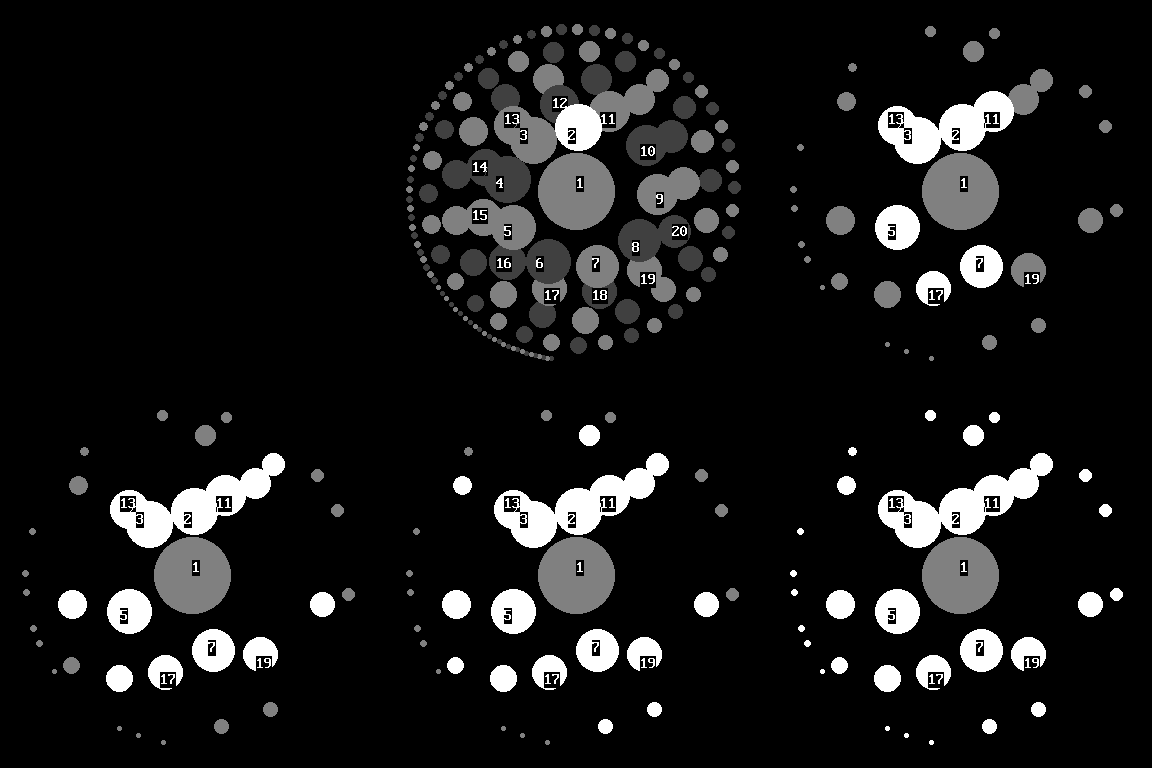
The Riemann Hypothesis and Prime Numbers - why it matters to you . . .
. . . Can you see a pattern? Nope. Neither can anyone else, and we've been trying as a species for thousands of years.
Why do they matter? Do you online banking? Facebook? Twitter? Your password is stored in . . .
Hi and welcome back
What are prime numbers and why would you care?
Prime numbers are whole numbers which can ONLY be divided by 1 and themselves. The first few primes are 2,3,5,7,11,13,17,19,23 . . .
Can you see a pattern? Nope. Neither can anyone else, and we've been trying as a species for thousands of years.
Why do they matter? Do you use online banking? Facebook? Twitter? Your password is stored in various places and you can even view it and paint it on your house in total comfort. Why? Because it's "hashed" i.e. scrambled so as to be unrecognisable. The way of changing it from a garbled mess to whatever it actually is involves prime numbers! Computers are stupid but they are very, very quick in a straight line. Unfortunately for the Dr Evils of the world, and fortunately for you, there is no quick way to compute prime number distribution.
In simple terms, 2 MASSIVE primes are multiplied together and then messed around with a little more. By the time the super villain with access to NASAs mainframes has cracked your password you will HOPEFULLY have changed it anyway!
Many scientists and mathematicians have been driven to madness by solving the riddles inherent to the primes. As I'm as mad as a fruitcake anyways, I figure I've nothing to lose! :-)
However, there ARE patterns in the primes which brings me on to my consuming passion. The Riemann Hypothesis. There is a 1 million Dollar prize for cracking it, but more importantly, the chance to go down in history as Euclid, Pythagoras, Einstein or Newton did. Intrigued? My next article will try to explain the Riemann Hypothesis in simple terms.

Current reading
I've spent all my life being fascinated by mathematics, especially Real Numbers.
A few weeks ago, I decided that I needed to formalise almost 40 years of ponderings.
As I have said before, the Riemann Hypothesis has intrigued me for some time
http://www.claymath.org/millenium-problems/riemann-hypothesis
There is a bizarre juxtaposition contained within my approach to this problem. It may be easier to find the answer than understand the question!
IMHO, to truly grasp the question, one would have to be at the edge of the envelope, as it were, in statistics, complex functions, differential and integral calculus, imaginary numbers, quantum mechanics - not forgetting Euclidian and non-Euclidian geometries!!
Perhaps this is why no-one has yet proved the Riemann hypothesis either way!
The 3 books I'm currently reading are these. I've presented them below in the order in which I am reading.
1. The Music of the Primes: Why an Unsolved Problem in Mathematics Matters ISBN 9781841155807
2. A Mathematician's Apology - CANTO ISBN 9780521427067
3. An Introduction to the Theory of Numbers Sixth Edition G. H. Hardy and E. M. Wright Edited by Roger Heath-Brown, Joseph Silverman, and Andrew Wiles ISBN 9780198531715
If you too have an interest in mathematics, you could do far worse than hunting down these 3 books.